

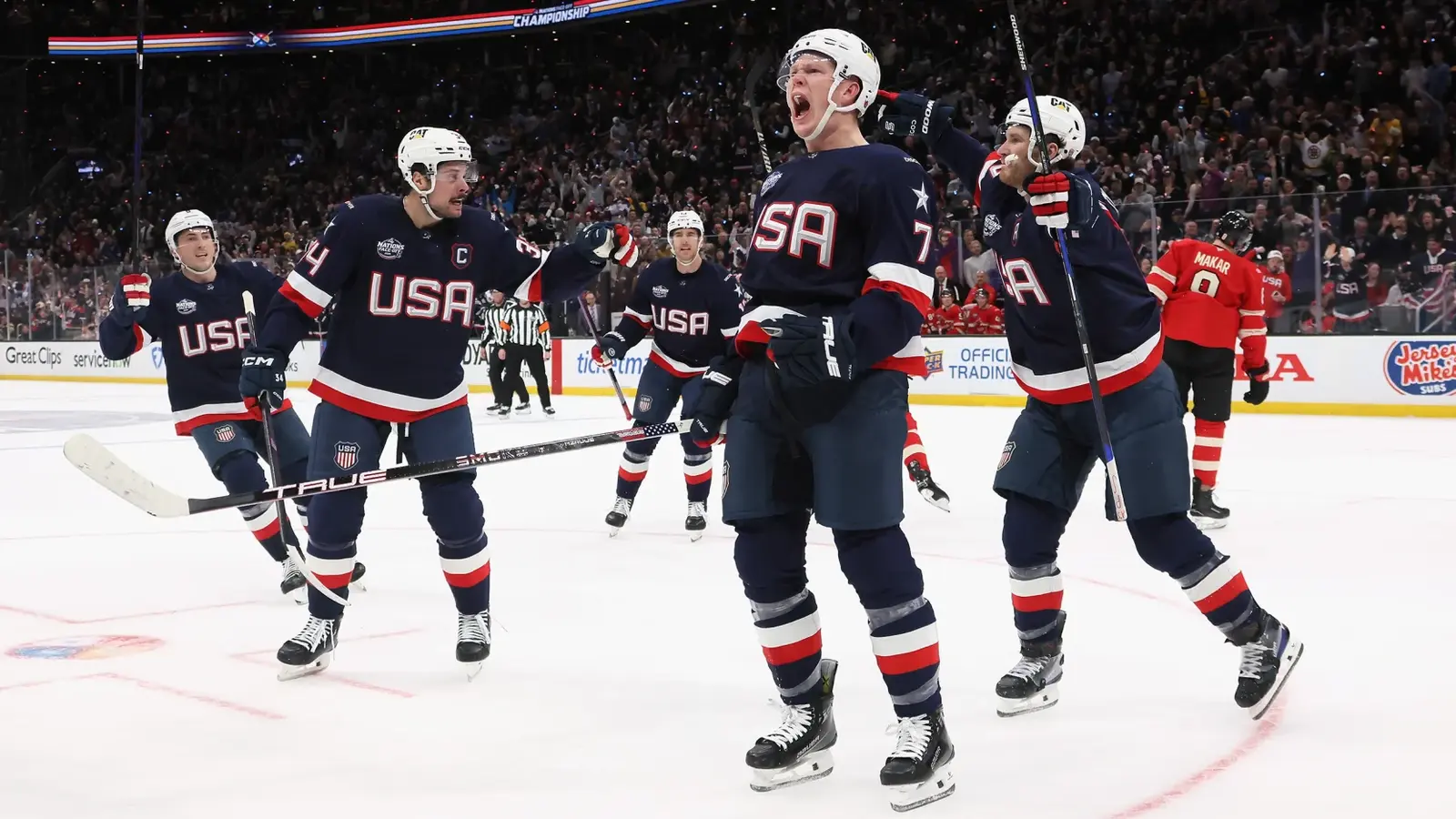
For the first time since 2014, beginning on February 11th, NHL players will be allowed to represent their countries in the Olympics, creating the first true best-on-best international hockey tournament in 12 years. Additionally, following a record-breaking Four Nations Faceoff last year, where the NHL pitted Finland, Sweden, the USA, and Canada against each other in a 4-team tournament, hype for Olympic hockey is at an all-time high.
Coming off their overtime Four Nations Faceoff victory and gold medals in the last two Olympics, where NHL players were allowed to play, Canada enters the tournament as the favorites. The Canadian roster is loaded with talent from top to bottom, including NHL point leader Connor McDavid, all-time great and Canadian legend Sidney Crosby, and the hottest young talent in the NHL, Macklin Celebrini. The one question mark for the Canadians entering the tournament is goaltending. Jordan Binnington is likely to be the starter after his stellar performance in the Four Nations Championship, where he came up with multiple clutch overtime saves to salvage Canada’s gold medal hopes. However, Binnington, known for his clutch gene, has been unable to find any consistency between the pipes over the past few seasons with his team, the Blues. So far this season, he has posted a lackluster .871 save percentage (SV%) and a 3.55 goals against average (GAA), both ranking near the bottom of the league. If Canada wants to come home with another gold medal, their plethora of goal-scoring talent and lockdown defense are going to need to play lights out in front of a shaky goaltender.
The United States will arrive in Milan looking to get some long-needed revenge on the Canadians, who have gotten the better of them in nearly all best-on-best tournaments this century, and more importantly, to capture their first gold medal since the “Miracle on Ice” in 1980. The Americans will enter the tournament with arguably the best forward group they have ever assembled, featuring the one-two center punch of Jack Eichel and Austin Matthews, along with the physical, talented Tkachuk brothers, who will be the heart and soul of the team. This will not be a group anyone wants to mess with. Additionally, between the pipes, they will have the reigning Hart (MVP) and Vezina Trophy (Best Goaltender) winner, Connor Hellebuyck, which will give the Americans some serious confidence in their goaltending in what will inevitably be some tight moments. With one of its most talented and determined groups ever, the US is one of the favorites for the tournament, looking to break its 46-year gold medal drought.
In addition to the favorites, Sweden, coming off a gold medal at the World Juniors, is another team capable of challenging for the gold. However, injuries to many key contributors, such as Leo Carlsson, Victor Hedman, Joel Eriksson Ek, and others, in the weeks leading up to the tournament could spell trouble for their chances. Sweden, the Scandinavian rival and defending gold medalists, is also loaded with NHL players and could make a run at the gold. Without the best defensive forward in the game, Alexandar Barkov, and prolific goal scorer Patrick Laine, a massive burden will be placed on Mikko Rantanen and Roope Hintz to lead this forward group. The back end should be strong for Finland, and they will need to step up if they want a chance to defend their gold medal.
Finally, Germany and Czechia both possess top-end talent that can go toe-to-toe with anyone, giving them the ability to upset some of the favorites. Still, they lack the depth to challenge for the gold. The host country, Italy, will also compete in the tournament with a roster made up of only players from European leagues and will likely struggle, especially given that they will be in the “group of death” with Finland, Sweden, and Slovakia. Whether we get another edition of the greatest rivalry in international hockey, Canada vs USA, or one of the other nations makes a run to the finals, this year’s Olympic Hockey is sure to create a thriller for fans around the world.


