

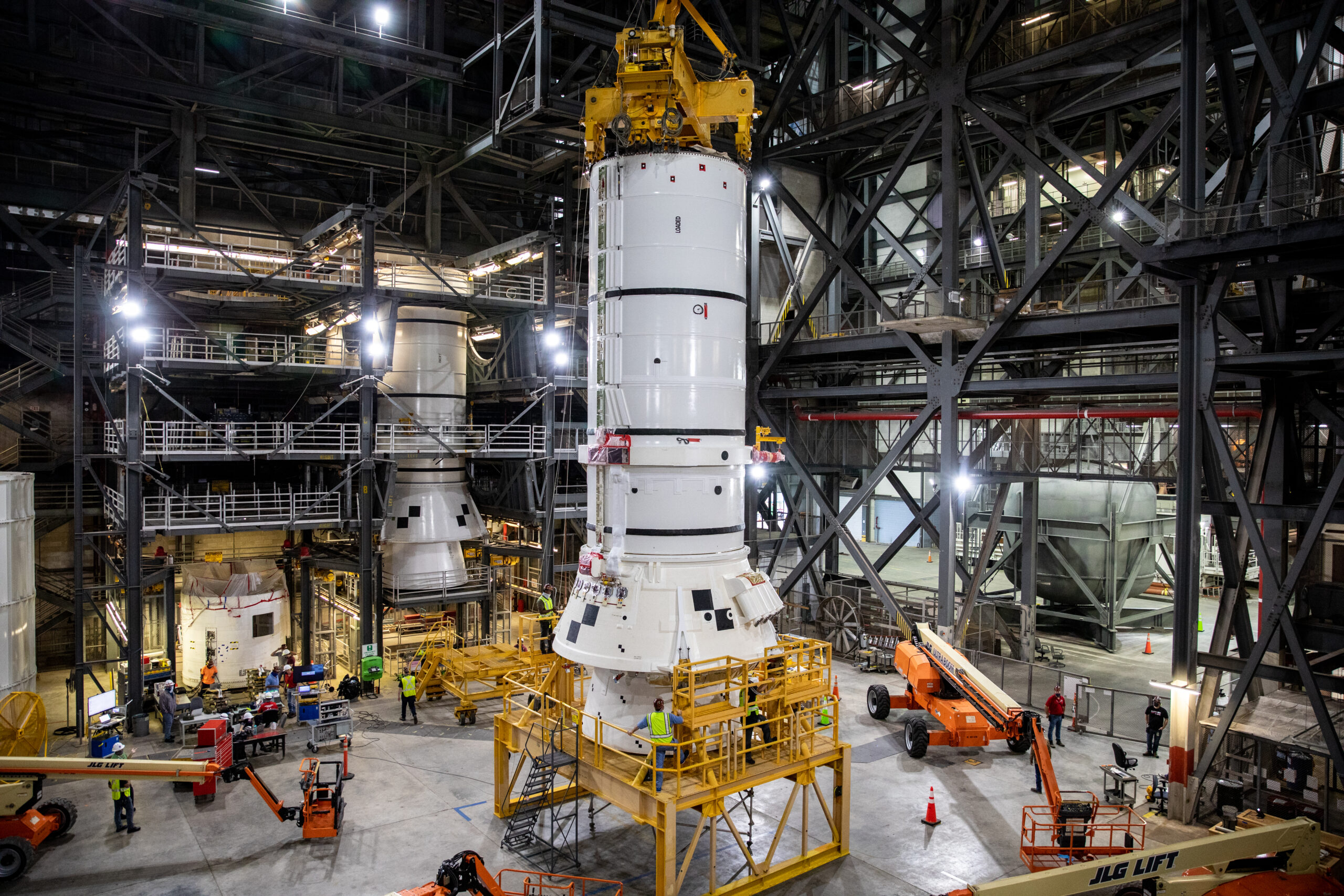
More than 50 years after humans last ventured past low orbit, NASA is preparing to send astronauts back to the Moon. Artemis II is a multibillion-dollar spaceflight attempting to orbit the Moon as early as March. Artemis I, completed in 2022, was a successful mission that orbited the Moon uncrewed to test safety features and ensure the technology was safe for humans. Artemis II is expected to launch as a crewed test flight to verify that all the systems work for future missions. Due to hydrogen leaks during testing, the mission was delayed but is expected to launch in the next few weeks. The Space Launch System, or SLS, is the most powerful rocket NASA has launched, generating roughly 8.8 million pounds of force, or the output of 160,000 corvette engines. The astronauts will launch from the Kennedy Space Center in Florida and stay in the Orion Capsule for the ten-day mission. Three out of the four crew members are American: Reid Wiseman, Victor Glover, and Christina Koch. The fourth, Jeremy Hansen, is Canadian and will become the first non-American to orbit the Moon. Artemis II will demonstrate that humans can safely return beyond low Earth orbit, advancing both science and technology. With the new technology, NASA will be able to prepare and succeed in future Moon landings and beyond.
In the future, NASA is working on landing on the Moon and then beyond. NASA aims to launch Artemis III in 2027. Artemis III is a mission to land humans for the first time on the south pole of the Moon. The astronauts will collect data, take samples, and make observations to help us better understand how the Moon formed and developed, as well as the origins of other materials found on its surface. Additionally, NASA wishes to launch Artemis IV no earlier than 2028 to try and work on the first lunar space station. NASA eventually would like to build longer-term infrastructure, including rovers, to further explore and conduct research. The new potential lunar space station will offer many more opportunities for research and future missions to Mars and beyond.


