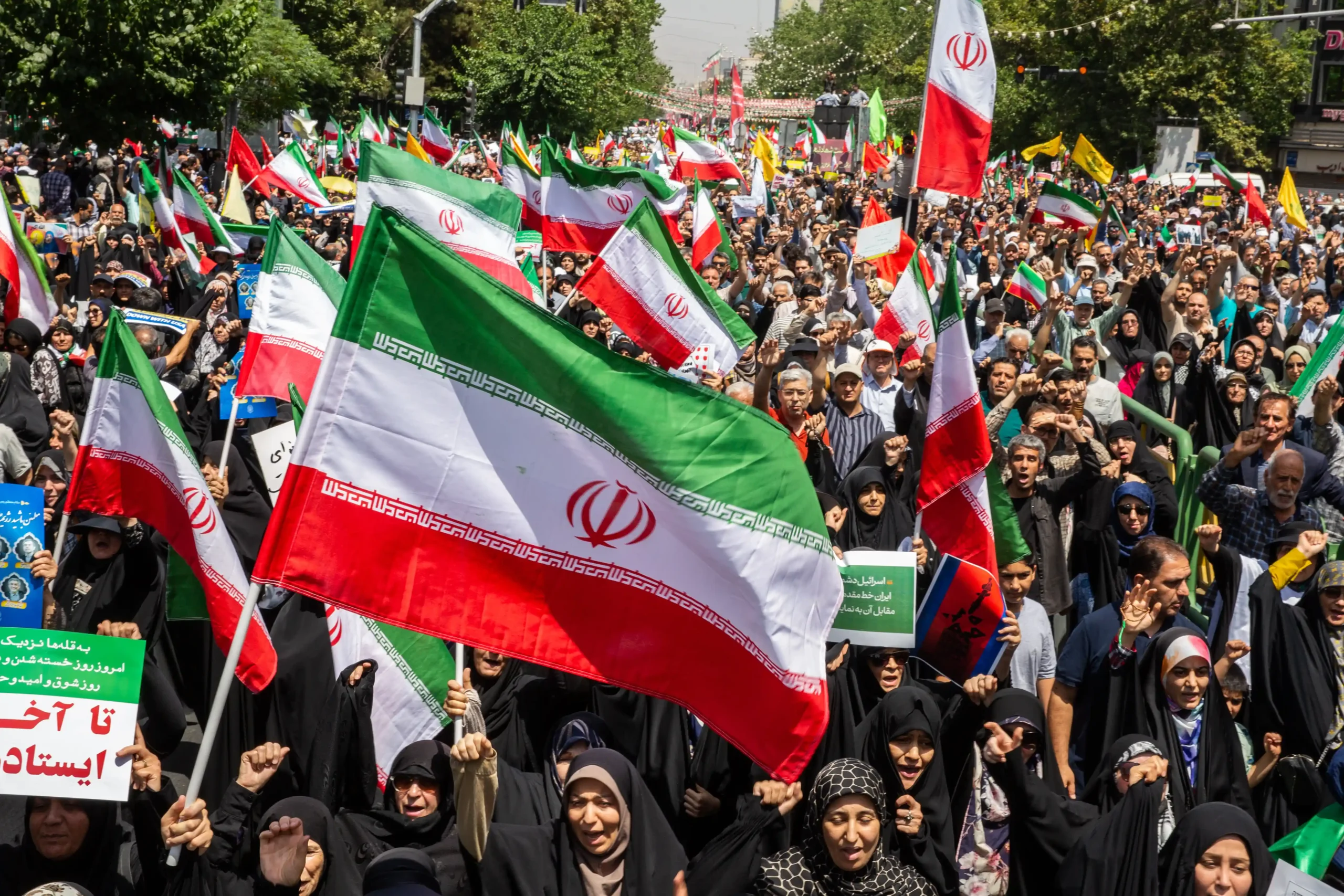
On December 28, 2025, millions of Iranians took to the streets in one of the largest protest movements in decades. The Human Rights Activists News Agency has confirmed that more than 6,000 protestors may be dead, with upper estimates reaching over 33,000. More than 40,000 civilians have also been detained in the bloodiest crackdown of Supreme Leader Ayatollah Khamenei’s leadership. Iranian officials, however, claim that at least 3,117 security forces or bystanders have been killed, mostly due to the protestors. The fierce crackdown that has occurred signals that Ali Khamenei, the 86-year-old Supreme Leader, and Iranian officials see popular revolt as a severe threat. After the protests, Iran cut off internet access for all 90 million citizens.
The dire economic crisis preceding these protests prompted Iranian citizens to initiate the uprising. The Iranian currency, the rial, reached a record low of 1.42 million to the US dollar, meaning that one US dollar was equivalent to 1.42 million rials. At the beginning of 2025, the rial traded at 1 million rials to the US dollar, and by November 2025, it had jumped to 1.25 million rials to the US dollar. This soaring inflation forced food and medicine costs to skyrocket, drastically affecting ordinary Iranian citizens. According to a report on November 17, 2025, the price of milk in Iran rose by 60% in a 5-month period. In addition, Iran’s GDP growth fell to near zero. In Iran, industry, including the oil and gas sub-sector, accounts for 45% of its GDP. However, sanctions have hit Iran hard. Since the 1979 Iranian Revolution, the US has maintained sanctions on Iran, and the Council on Foreign Relations estimates that these sanctions have reduced Iran’s economic size by 15-20%. In more recent sanctions, the UN reimposed nuclear-related sanctions on Iran in September 2025. As the protests took hold, broader intentions began to spread. Calls to end the Islamic Republic and to assassinate Khamenei quickly increased. Iran’s political landscape is dominated by Supreme Leader Khamenei, who has ruled for over 36 years. Iran does possess an elected president and parliament, though they possess little political power. In 2009, protests broke out across Iran when incumbent president Mahmoud Ahmadinejad defeated reformist candidate Mir-Hossein Mousavi in the June 2009 presidential election. In this case, many protestors believed the elections were rigged and demanded greater political freedom and less authoritarian rule, both ideas that are still being pushed by protestors today. In the crackdown following this protest, tens of thousands were arrested, and the protests were eventually suppressed. Similar to today’s protests, the 2017 protests were initiated mainly by economic hardship; however, the protestors argued against the entire political system, including the reformers. After another severe crackdown, in which around 8,000 were arrested, these protests eventually faded as well.
Foreign military aid, especially from the US, has divided opinion among Iranian citizens. As the protests began, Trump posted on Truth Social, “Keep protesting. Help is on its way.” However, no help from the US arrived. As a result, in the Times magazine from January 2026, it notes that some Iranians even place some of the blame on Trump, with increasing outrage as Trump thanked Iran’s rulers on January 16 for abandoning planned executions. While foreign intervention seems unclear, some Iranian citizens fear that foreign intervention may just cause more violence, looking at the past US foreign intervention in Afghanistan as an example. However, US intervention appears imminent. In February 2026, the US military near Iran rapidly grew to include two aircraft carrier strike groups, destroyers, cruisers, submarines, and 50 additional fighter jets.
As tensions continue to rise, will there be US intervention? Will regional proxy forces come into play? Will Iran’s ballistic missiles threaten US bases? Only time will tell the answers to these questions; however, one thing remains clear: the Middle East is on the brink of a new phase of instability.


