

“If you had one message that embodies your story, what would it be?”
The voice on the other end of the line paused, calculating each word before carefully stating, “I chose to have a rich life, not becoming a rich person.”
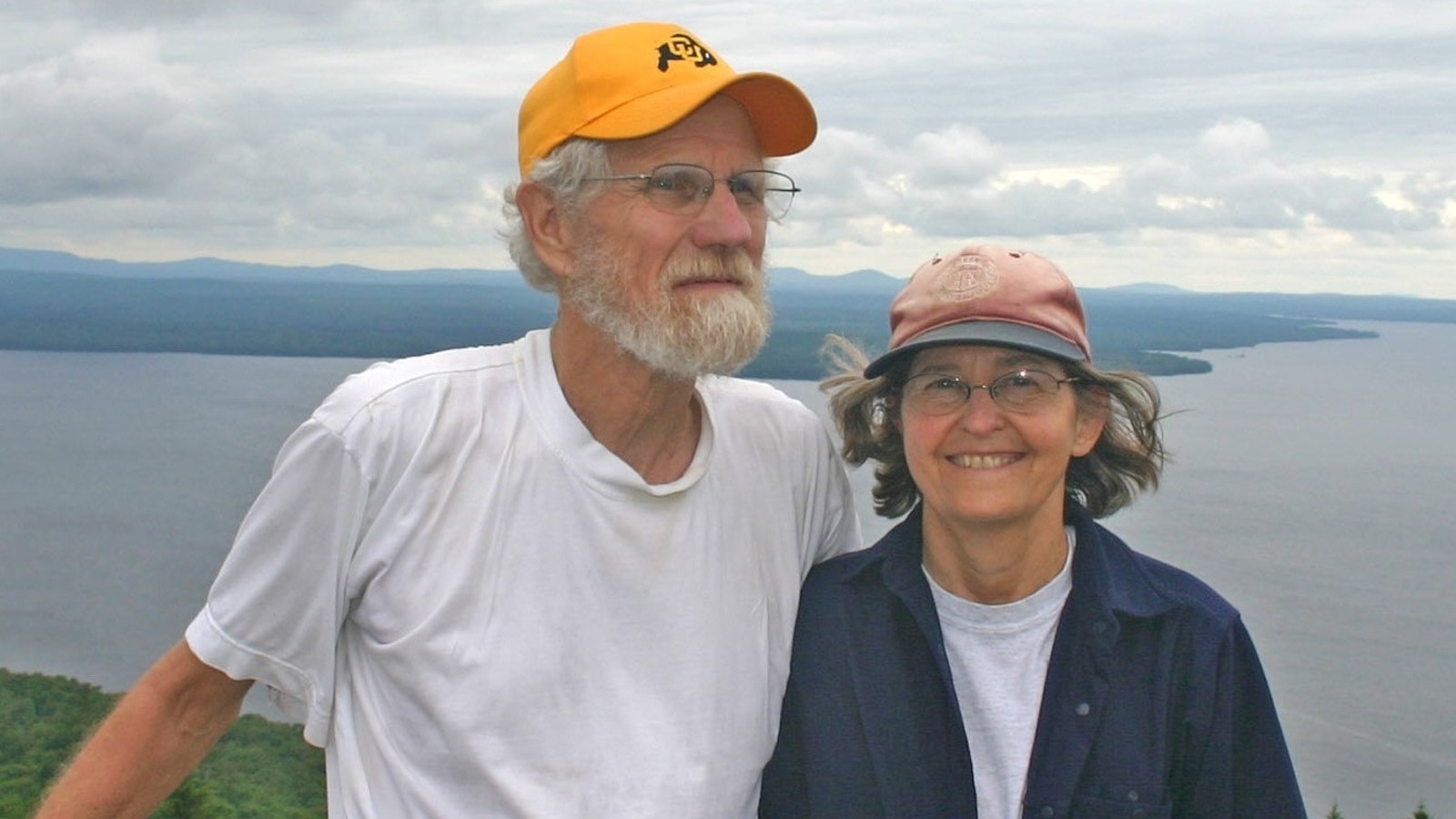
Nat Fleck ’59 graduated from Belmont Hill 67 years ago and has since lived an adventurous life. Growing up in Lincoln, Massachusetts, Fleck attended Belmont Hill before studying physics at Williams College in Western Massachusetts. After graduating, he taught in multiple countries and traveled extensively with the Peace Corps. Outside of work, Fleck immerses himself in nature. His experiences range from learning to canoe at a young age to biking over 60,000 miles, backpacking over 4,000 miles, and even becoming a published photographer.
Fleck admits that he was never a confident person during his time at Belmont Hill: “Like many other kids, I’m afraid, I didn’t feel very smart at Belmont Hill,” Fleck recalled, “but the issue was that I met some of the most brilliant, brilliant people at Belmont Hill.”
When applying to college, Fleck chose Williams College, where he majored in physics, inspired by a Beta version of a physics course from the Physical Science Study Committee at MIT he took in his senior year. As he approached graduation, Fleck was unsure of his career and lacked confidence: “I didn’t feel like I was ready to go on to graduate school. I grew up in a very sheltered environment in Lincoln, Belmont, and Williams.”
Luckily for Fleck, he had past experiences to guide him. On Moosehead Lake in Northern Maine, Fleck’s grandfather ran a canoeing camp. The lake was so secluded that there was not a paved road in the area. Fleck spent lots of time at his grandfather’s camp, learning to canoe with the J-stroke and Indian-stroke and taking relaxing walks to examine the nature around them, before teaching the same lessons to younger children when he was in high school.
“What I really knew how to do well was work with kids,” Fleck reflected. Additionally, Fleck has two uncles and a grandfather who were teachers. Using these as inspiration, he contacted the Dean of Students at Williams and asked about pipeline schools to Williams.
“He gave me the school, Northfield Mount Hermon, so I applied and fortunately was able to take the job there.”
He began teaching math at the boarding school, which he recalled being “academically extremely similar to Belmont Hill School.” After a while at Mount Hermon, Fleck was eager for new experiences. Luckily, he found an advertisement for a teaching position at an American school in Switzerland, and was soon offered a job. The program in Switzerland was a post-graduate program for kids who finished high school but did not feel quite ready for college.
“It was an amazing program,” Fleck explained, “I was teaching courses as I would at Belmont Hill if I were to teach there.” Interestingly, school started as soon as they left for Switzerland: “I was helping students get higher math SAT scores on a ship in the middle of the Atlantic!”
After his time in Switzerland, Fleck found a job at the Colorado Rocky Mountain School near Aspen. “That’s where I learned my real teaching craft,” Fleck stated, “For one, we gave no grades, but we were told to leave a comment on each assignment, which included at least one positive thing in it, no matter what. That made all the difference in the world.” He noticed that weaker students gained confidence, allowing them to improve dramatically and accomplish much more than they had previously thought possible.
Fleck also spent five years teaching in Africa. While serving in the Peace Corps, Fleck moved to Ghana to teach in a girls’ school. The school was one of six high schools, half boys’ schools and half girls’, composed of the top students from all of Ghana. At Fleck’s school, he had girls from 26 tribes, each speaking a different language. Although there are negative stereotypes surrounding education in Africa, Fleck recalled that he was “teaching the same level of physics that he learned at Williams.”
Additionally, the selectiveness of the school provided an extra perspective on his own quality of life: “The education is so far out of village life. It really makes you realize that you take so much about your education, let alone a Belmont Hill education, for granted.”
Aside from his teaching in Ghana, Fleck also taught at an international school in Zambia for two years. The students came from all over the world; in fact, the graduating class represented 24 countries. Lastly, he also spent a year teaching in Cairo before the school’s program shut down prematurely.
Unlike a “normal” job, international teaching allowed Fleck to explore the world year-round. “I would have only had two to three weeks to vacation each year. With teaching, I could continue exploring all the time.”
Among many stories of his travels in Africa, notable ones include climbing Mount Kilimanjaro for four days and descending for two, finding Mountain gorillas in Zaire, and visiting the Pyramids of Giza.
Fleck’s outdoor adventures don’t end in Africa. Rather, they just scratch the surface. As mentioned before, Fleck is an experienced canoer and has often gone on month-long expeditions. However, his most impressive expedition was his 1,000-mile backpacking trek from the Oregon-California border to Canada.
Before his excursion, Fleck was teaching at a school in Atlanta, and, for whatever reason, he and his wife just did not like it. Looking for an alternative experience, they decided to backpack the Pacific Crest Trail. Starting on the Oregon-California border, they spent three months traveling over 1,000 miles. “We were carrying all our food, tents, clothes with us, and on the whole way, we had five stops at the only five roads we saw to pick up more food,” Fleck recalled picking berries with his wife to accompany their dinners as they made their way north into Canada.
Moreover, the wildlife on the trip was incredible. Fleck remembered seeing bighorn sheep, a lynx, bears, and more.
“You know, I grew up without much confidence, but doing something like this trip instills a lot of confidence in you,” Fleck reflected on the unique lessons he learned on this trip. “You feel like, Good Lord! I accomplished this whole trip. I walked for three months for a thousand miles! The more you do that, the more you feel like a person who can accomplish challenges like that. You learn to have a ‘can-do’ attitude.”
Apart from his backpacking journeys, Fleck has made countless biking trips: “I’m an environmentalist, so I’ve made sure to live close to work so I can bike there.”
For ten summers, Fleck went on biking expeditions, nine of which were over 1,000 miles. He even biked in Crete, claiming that his methodical travels allowed for a new perspective on history. He realized that Crete was settled because of its mountainous terrain: “It would be nearly impossible to attack a city here!”
Even though driving a car is much faster than biking, Fleck finds it important to slow down and observe: “You learn so much more about the place you’re traveling through when you are biking. When you are driving, it’s all one blur. You don’t actually learn.”
Tagging along with all of his outdoor activities is his camera. Fleck, a published photographer, avidly documents his travels through photography. He posts his pictures online on his own website and on Flickr. His work ranges from places, including New Mexico, Vermont, and Costa Rica, to vehicles, to more nature-focused topics, such as trees, birds, and, of course, his own travels.
“It’s been an exciting life,” Fleck admitted to me, “I never set out to make a lot of money, and that has allowed me to live in five countries, eight states, backpack for thousands of miles, become a ski-instructor in Colorado and New York, and all my other adventures.”
Fleck used his father as a counterexample for his ideology. His father, who came from a wealthy family, wanted to pursue a career in foreign services. However, his family convinced him to major in business in order to keep the family business going. Fleck explained that “it is important to be careful about your choices. Do not get swayed by the prospect of a big salary. That gets a lot of people into trouble.”
He related another story: “One of my good friends from Belmont Hill went to Harvard Law School because he knew that lawyers made a lot of money. After years of studying, he got a job at a very prestigious firm, but as soon as he started working, he realized that he hated practicing law!”
Fleck encourages people to focus on passion rather than success: “Don’t become a doctor because you can make a lot of money. Become one because you love the profession.”
Fleck has made many choices that others found questionable, and he admitted he regretted them at times. Sometimes, he wished that he had gotten his PhD in physics so that he could have a higher standing in society, or maybe become a recognized research physicist. However, in the end, Fleck also remembers the immense impact he has had on hundreds, if not thousands, of students, and his travels around the world would not be possible without his “questionable” decisions.
“In retrospect, at this point now, I’m really glad that I ended up with the path I followed,” Fleck calmly asserted.
“Well, that leaves me with only one more question left,” I admit to the now-familiar, enlightening voice on my phone, “If you could give only one piece of advice to a Belmont Hill student, what would it be?”
Fleck paused for a moment, deep in thought. “Here’s my one piece of advice,” he said, taking a deep breath. “Try to find experiences that will enrich your life, not make your life rich, and your life will be more wonderful than anything money can buy.”


