On January 3, 2026, Venezuelan President Nicolas Maduro was captured by US Forces in a large-scale military operation called “Operation Absolute Resolve.” Taking just about two hours and 20 minutes, this operation involved 150 aircraft and 200 Special Operations forces, with no American casualties.
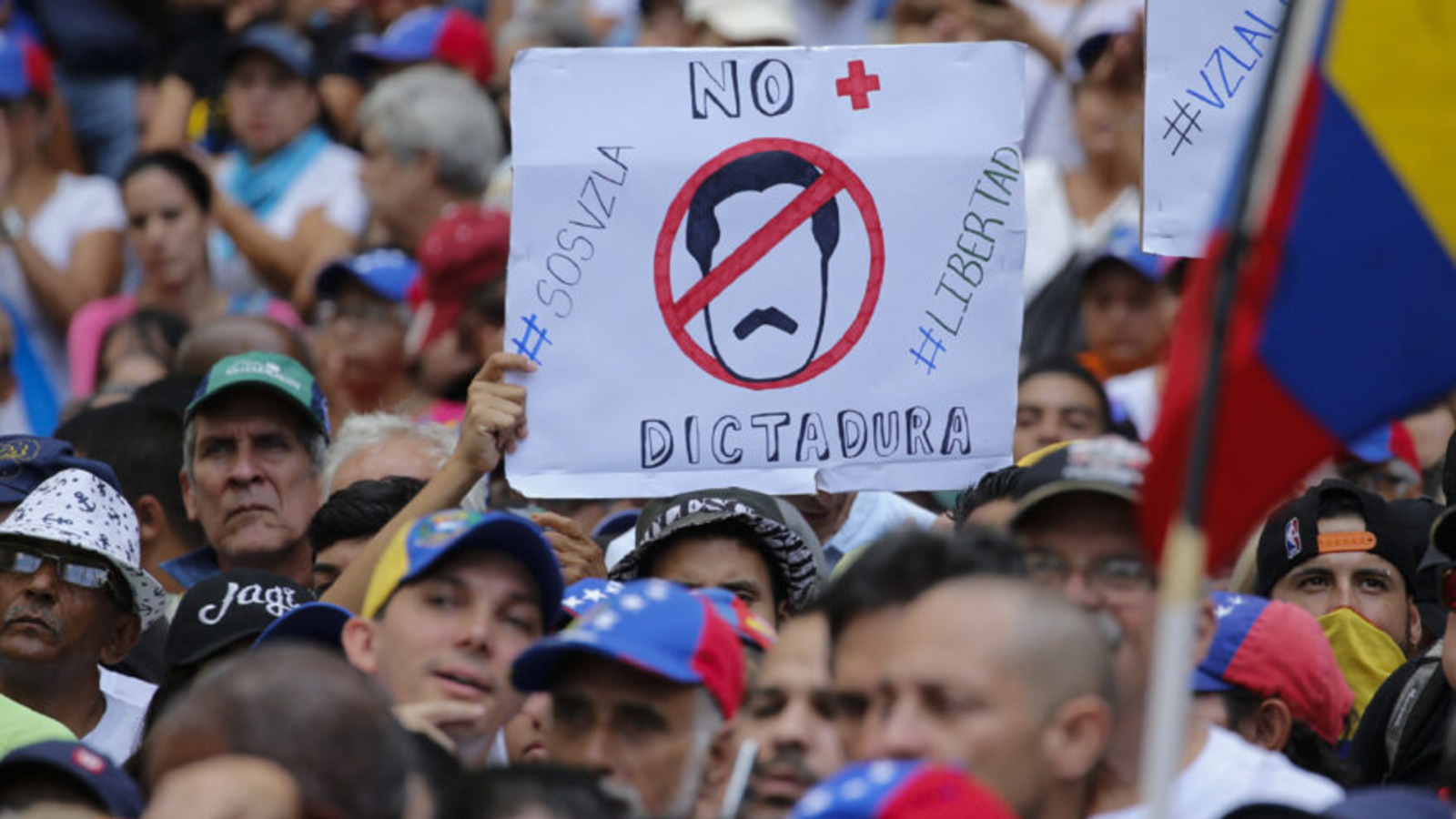
An early supporter of Hugo Chávez, Maduro campaigned for the former’s release after a failed 1992 coup. In 1998, Chávez became president of Venezuela, allowing Maduro to quickly rise in the ranks of the government. Under the rule of Chavez, the Plan Bolivar 2000 program was created, which included road building and housing construction, highly popular policies among Venezuela’s masses. However, after Chavez appointed political allies to the head of the state-owned company PDVSA, Chavez rapidly fell out of popularity. Before his death in 2013, Chavez named Maduro as his successor, leading to Maduro’s narrow victory in the subsequent election. In the following years, Maduro would rule as an Authoritarian leader with highly disputed elections in 2018 and 2024. Over this period, Venezuela experienced a 75% drop in GDP due to mismanagement and declining oil output. In recent years, the US State Department has accused Maduro of narco-terrorism and drug trafficking, eventually leading to his ousting.
For many Venezuelan families living abroad, the events unfolding have brought a complicated mix of relief, hope, and cautious optimism. This news marked a moment many had long believed might never come. I spoke with my photography teacher, Mr. Duarte (Chair of Visual Arts at Belmont Hill), whose family still mostly lives in Venezuela, to understand what these developments mean on a personal level, beyond headlines and politics. His perspective offers a tangible account of how Chávez and Maduro’s rule affected everyday life and what his removal represents for those who endured it.
Mr. Duarte learned the news in the early hours of the morning. “It’s an experience I’ll never forget,” he said. “My phone buzzed at around 3:00 A.M. I had missed six or seven calls from my dad.” Expecting bad news, he picked up the phone only to hear music and celebration in the background. “I stayed up all night.”
His father is the only member of his immediate family to have immigrated to the United States, while the rest remain in Venezuela. Like many families separated by the crisis, WhatsApp became their primary means of communication. Hugo Chávez, Maduro’s predecessor, came to power when Mr. Duarte was 13 years old, bringing with him a socialist revolution in Venezuela. Under the new regime, Mr. Duarte was no longer able to return to Venezuela. As a child, he would travel back to Venezuela every year to visit his family. “When we traveled [as a child] to visit family, it was a joyous experience. I was very close to my family there. There were parties, family gatherings, beach gatherings.” Mr. Duarte recalled. “And always enough food.” While poverty existed, his family never faced deprivation. That changed dramatically as corruption, inflation, and violence worsened under the regime.
“Never in my life did I think I would see it happen,” Mr. Duarte said of Maduro’s removal. After years of protests, marches, and rigged elections, disappointment became routine for him. “There was a part of me where I was about 98% sure I would never go home. I was starting to come to peace with that chapter of my life that would just be memories from the distant past.”
As Venezuela’s economy collapsed, daily survival became increasingly difficult. The government implemented a rationed food distribution system tied to identification numbers. “If your day to buy food came and there was no chicken, you just didn’t get chicken,” he explained. Mr. Duarte and his father in the U.S. began sending frequent shipments of supplies to relatives in Venezuela: powdered milk, basic medicine, toilet paper, soap, and clothing. These items had become scarce or unaffordable. Over time, even video calls changed. “We noticed the FaceTimes getting shorter,” he said. “Our family was losing weight and looked gaunt. They didn’t want us to worry.”
In the aftermath of Maduro’s removal, Mr. Duarte says his family feels relief, but not certainty. “They’re very happy,” he said. “I don’t have a single family member who expresses hatred toward the United States.” Still, they remain “cautiously optimistic,” a term Mr. Duarte often used, aware that many figures from the Maduro regime remain in positions of power and that rebuilding political and economic infrastructure will take time.
Mr. Duarte emphasized that his reaction, and that of his family, should not be misinterpreted through partisan lenses. “People assume that because I’m happy about Maduro’s removal, I support everything associated with it politically. That kind of binary thinking is dangerous,” he said. “You can support one outcome without endorsing everything behind it.”
He also urged Americans to consider their own lived experiences when discussing Venezuela. “Many people here analyze this from a theoretical perspective, because they’ve never lived in those conditions,” he said. “When you’ve lived like that for 27 years, like an animal in a cage, you don’t have the ability to sit and think about hypotheticals.”
His message is not one of certainty, but of urgency. “There are a lot of unknowns in the next year or two. This is not over,” he said. “But when the alternative is continuing the same suffering, people are willing to try something different.”
As Venezuela enters an uncertain transition, Mr. Duarte hopes that Venezuelan voices remain at the center of the conversation. “Listen to the people who lived it,” he said. “If you haven’t lived it, you can’t speak over them.”


