

Despite its Arctic, frozen, and—ironically—not-so-green environment, Greenland has found itself competing for a top spot in global politics. Greenland, although part of Denmark, maintains its own autonomy for domestic affairs, whereas most foreign responsibilities fall upon its mother country. Positioned between North America and Europe, Greenland has a strategically advantageous location, and as more ice melts due to climate change, it, along with the surrounding bodies of water, has become increasingly accessible. Greenland’s accessibility, advantageous geopolitical location, and rare Earth mineral reserves have shot Greenland’s political stock through the roof.
Greenland’s hefty mineral reserves are critical for electronics, renewable technologies, and defense systems, creating rising pressure, especially as Western countries seek alternatives to Chinese-dominated supply chains. Donald Trump initially expressed interest in purchasing Greenland in August 2019, citing its strategic and economic importance, during his first term as president. Danish officers firmly rejected the notion at the time, but Trump has repeatedly revived his push for the United States to maintain Greenlandic control in recent months. In early 2026, he even threatened to impose higher tariffs on Denmark and other European allies that opposed U.S. influence, declaring Greenland “our territory,” sparking intense disputes as of late.
Greenland’s mineral reserves for sustainable energy have been at the center of diplomatic debate, a major stimulant of global political interest. The melting ice has made more of these resources accessible for extraction, just as demand for them has increased. Powerful countries, including the United States and European Union/NATO Allies, have attempted to jump on the promising trend, fighting over the supply chain. Even though Greenland’s economy is on the rise, there are doubts about its ability to sustain itself, given its heavy reliance on fishing and yearly grants from Denmark. Additionally, while its rare Earth minerals account for only 2% of total exports, it holds roughly 20% of the global rare Earth reserves, creating rising global geopolitical tension. Many people in Greenland desire greater autonomy, yet they often rely on Danish subsidies.
The last significant factor is the effects of climate change on Greenland, and the easy access to study them. Since Greenland’s longstanding icy environment is melting more each year, it has become a hotspot for climate change research. The studies possible in Greenland could revolutionize sustainable technologies that combat climate change, making it highly appealing to certain countries, particularly in the United Kingdom, China, and its Nordic neighbors. These countries place heavy emphasis on Greenland as a “stable and reliable partner” for securing sustainable development, especially within the European Union, and view Greenland as an essential source of rare Earth elements for wind turbines and electric vehicle batteries.
Greenland plays a significant role in U.S. strategic efforts: the country hosts a U.S. military base with roughly 150-200 U.S. personnel stationed, serving as a critical 24/7 hub for missile warning and surveillance. Additionally, the U.S. is allowed to establish additional bases under an agreement signed in 1951, leading many to believe that Trump’s real motives are to expand U.S. territory.
NATO itself has acted to calm the situation. As of February 11th, NATO launched the Arctic Sentry mission to increase its military presence in the Arctic. The goal of this mission is to prevent escalation and to establish a readily available force to diffuse any heightened situation.
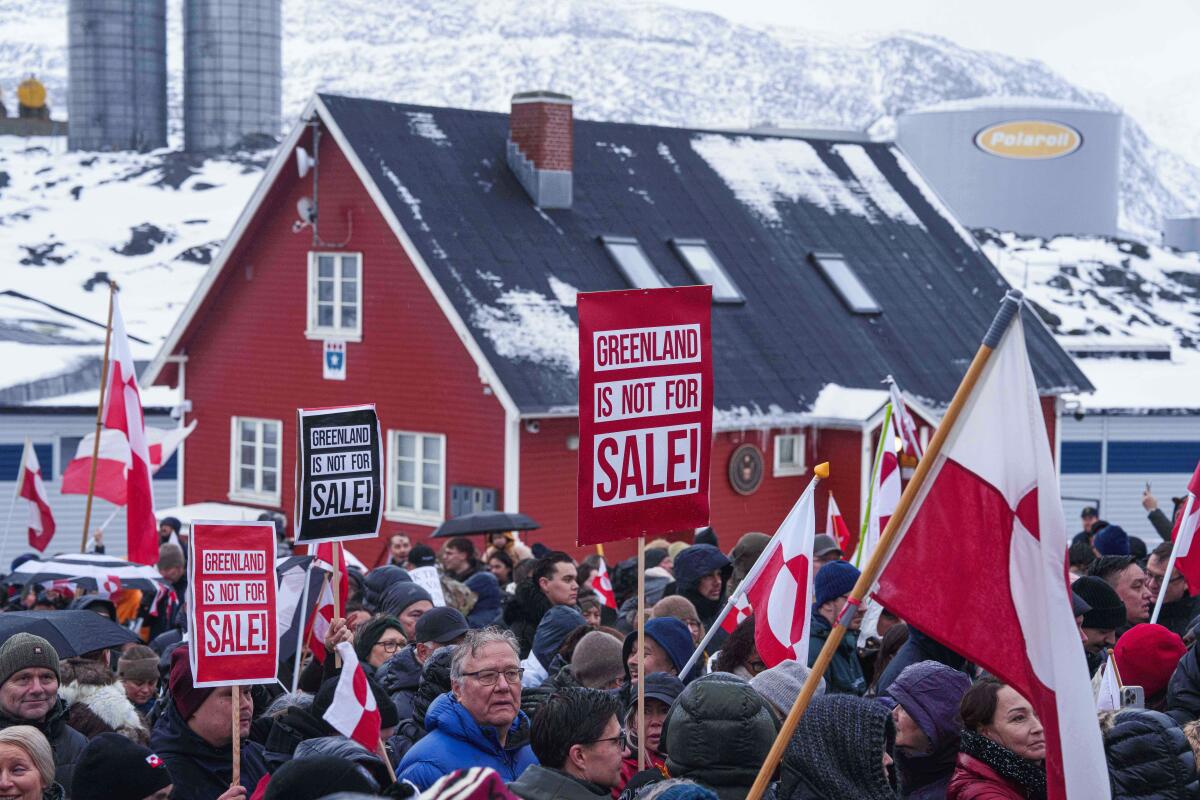
While international powers debate, Greenlanders have been outspoken about their future. Across Nuuk, Greenland’s capital, many residents and leaders reject the idea that their island should change hands or become part of a foreign power’s territory.
Polls indicate strong public opposition to U.S. control. Though specific national polling from 2026 is still emerging, past surveys have shown overwhelming resistance to annexation, with the vast majority of Greenlanders saying they do not want to join the United States, citing concerns about autonomy, social protections, and legal governance. In response to talk of acquisition, thousands rallied in Nuuk and Copenhagen, chanting “Greenland is not for sale” and “Hands off Greenland,” demonstrating widespread public unease.
Local leaders have also taken a firm stance: Greenland’s business and mineral resources minister, Naaja Nathanielsen, says that people in Greenland are “very, very worried” over the administration’s desire for control of Greenland. A senior government official said it’s “unfathomable” that the United States is discussing taking over a NATO ally, urging the administration to listen to voices from the Arctic island’s people.
Greenlandic officials have participated in high-level talks with U.S. and Danish officials to define a security partnership that protects its interests and respects its autonomy.
Meanwhile, the opening of new diplomatic posts by Canada and France in Nuuk reflects Greenland’s growing role in Arctic affairs and offers Greenlanders more international connections beyond the U.S.-Denmark axis. As the world watches, Greenlanders are making it increasingly clear that their voices matter in shaping how global powers interact with their homeland.


