

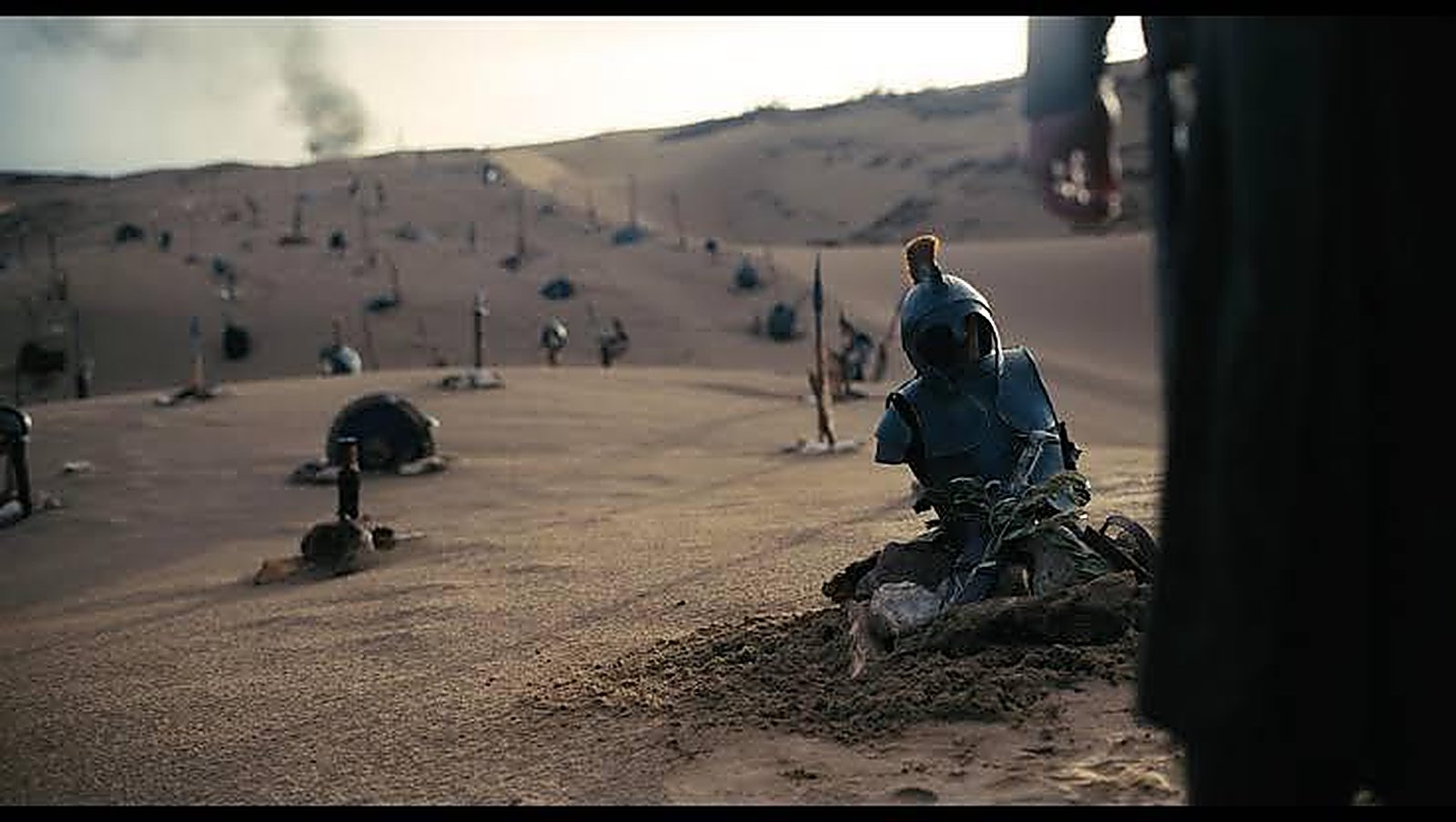
Long-anticipated and debated, Blockbuster director Christopher Nolan finally released his adaptation of Homer’s epic poem “The Odyssey” on July 17th. Nolan drew from University of Pennsylvania Classicist Emily Wilson’s 2017 idiomatic and accessible translation as his main source. Naturally, the film follows a more direct and at times adapted version of Odysseus’ journey home to Ithaca. With a quarter-billion-dollar budget, Nolan filmed across six countries using only IMAX 70mm film, totaling roughly 2 million feet.
The film begins by introducing both Odysseus’s journey home and the trouble waiting for him in Ithaca. Already missing for eight years following his victory in the Trojan war, Odysseus regains his memory on Calypso’s island of his past. He recalls his departure from Troy, blinding a cyclops, the siren’s song, the slaughter by the giant Laestrygonians, Circe’s tricks, and Poseidon’s constant storms, enraged for his one-eyed son. While the king of Ithaca plans his route home after being freed from Calypso, his son Telemachus struggles with abusive suitors in their home. Attempting to marry Queen Penelope in the absence of the king, the men abuse the law of Xenia, or hospitality, and consume the king’s food and wine daily. After being visited by Athena in human form, Telemachus searches for word of his father in Sparta, where he finds his father’s Trojan comrade Menelaus.
A source of controversy stemmed from the loose interpretation of events. Even the translator, Wilson, critiqued the film’s lack of emotional depth and character development, and argued that the omission of the epic’s more explicit sexual scenes strips the story of key details. Other criticisms pertain to the representation of Odysseus himself. Despite thoroughly enjoying the film otherwise, our own Dr. Davis, an expert in Homer’s epics, agrees. In translation, Odysseus is a strong and determined leader, yet is also very self-motivated and cares little about the loss of his men, as long as he makes progress toward home. Nolan’s Odysseus mirrors Aeneas, a hero defined by duty and care for his men.
Ultimately, Nolan’s “The Odyssey” is more reinterpretation than faithful retelling, altering key components of the epic. Whether you love it or hate it, Nolan’s version proves that a 3,000-year-old story can still start an argument.


