

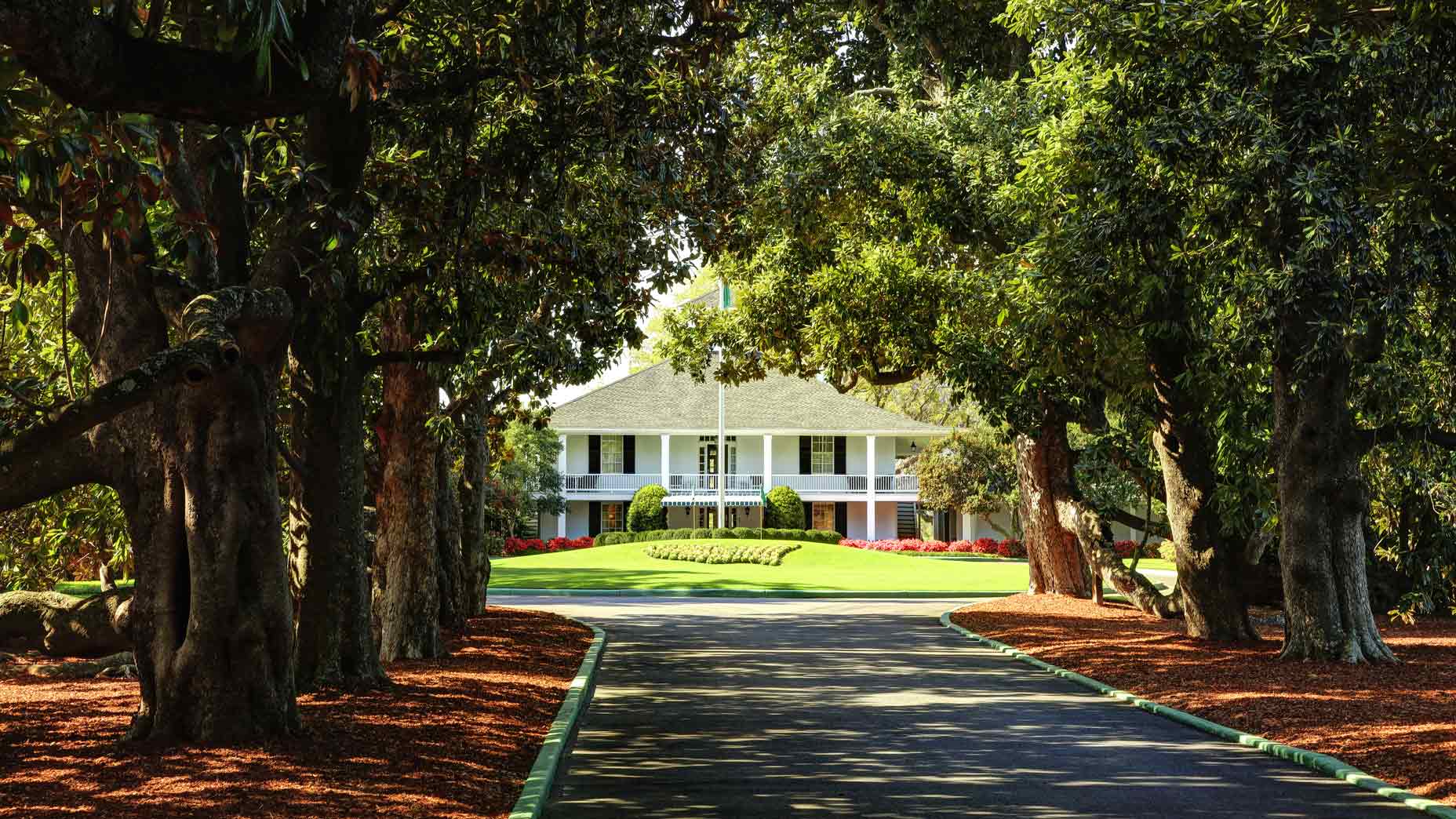
There is a sign at the gate. It is small, so small that most people would miss it while driving down the busy Washington Road. For an institution of Augusta National’s standing, it is almost aggressively understated. And that understatement tells you all you need to know. Behind the sign, a long magnolia-lined drive leads to one of the most recognized and most prized places in all of sports, and yet the club that sits at the end of the drive remains deliberately, and even sometimes defiantly, unknown. There is no social media presence at Augusta National, no membership brochures, no press office that returns calls. There is no waiting list. You do not apply to be a member. You are asked.
For one week last month, the place that refuses to announce itself became impossible to ignore. Rory McIlroy had entered the weekend with the largest 36-hole lead in Masters history, only to watch it dissolve in the third round, sending him to Sunday tied. He birdied 12 and 13, then scrambled through the entire back 9 with impressive and improbable par saves, and found himself on the 18th tee up by two shots. He then proceeded to pull his drive so far right that it ended up almost on the 10th hole. With the pressure of the whole world watching, Rory was able to still salvage a bogey to win by a shot. In doing so, he joined Jack Nicklaus, Nick Faldo, and Tiger Woods as the only players ever to win back-to-back green jackets. Augusta did not manufacture that drama; it simply provided the stage, letting the weight of the place do what it always does.
This is the paradox that is Augusta National. It is both one of the most public and one of the most private places on earth. One April week a year, it opens its gates to the public and allows cameras to show off its beauty while hosting the Masters Tournament, the most prestigious event in all of golf, and maybe in all of sports. But after Masters Sunday, it all goes away, the gates close, the azaleas are tended to in private, and the world waits.
When a photographer is issued a credential for Masters Week, it comes with conditions, not suggestions. Augusta reviews every image, manages every angle. There is a reason why every picture of Augusta looks the same: green so vivid it doesn’t look real, players playing on a backdrop that could have been painted. The club leaves nothing to chance. Even CBS, which has broadcast the Masters since 1956, has to operate within Augusta’s rules. Commercial time is limited, language carefully managed. At Augusta, spectators are ‘patrons,’ not ‘fans’; off the fairway is the ‘second cut,’ not the ‘rough’; and it is a ‘bunker,’ not a ‘sand trap’. The broadcast is presented on Augusta’s terms, or not at all. They have the leverage to do so.
Even the tickets reflect this control. They are not tickets; instead, they are badges, tied to individual patrons, not for resale, and can only be purchased through an annual lottery. Membership remains even more elusive: 300 members, no member list, and no stated criteria to join. The effect of this scarcity is not accidental. When something cannot easily be obtained, the desire for it increases. Augusta does not need to market itself; the difficulty of its entry does the work instead.
There is almost something religious about the way the Masters arrives every year. Each April, it is anchored by the same Georgia spring, the same soft music, and the same unhurried pace. Amen Corner, the most famous part of the course, starting with the green on the 11th and ending with the tee shot on 13, did not become renowned through marketing; it became famous because of its nature as an annual ritual that feels unique each time.
Every April, without fail, the world turns to a corner of Georgia and watches the white manual leaderboard shift with every roar and every groan and the green jackets change hands. Augusta does not advertise this. They don’t need to. The desire is already there, built up over decades of withheld access and beautiful, lifelong moments made to feel sacred. The most powerful brand in sport doesn’t view itself as a brand, and maybe, more than anything, that’s why it works.


