

On Martha’s Vineyard, winter is quiet – the kind of quiet where you can hear the rigging knock against empty masts in the harbor, and the only footprints on the beach are your own. On a late February morning, the island sits buried under snow, still recovering from a two-foot storm just days before. Storefronts are shuttered, their ‘closed for the season’ signs worn out from years of the same wait, and the roads that will choke with August traffic now stretch empty to the horizon. For year-round residents, this slow, unforgiving rhythm is simply life, sustained by the promise that spring and summer will return.
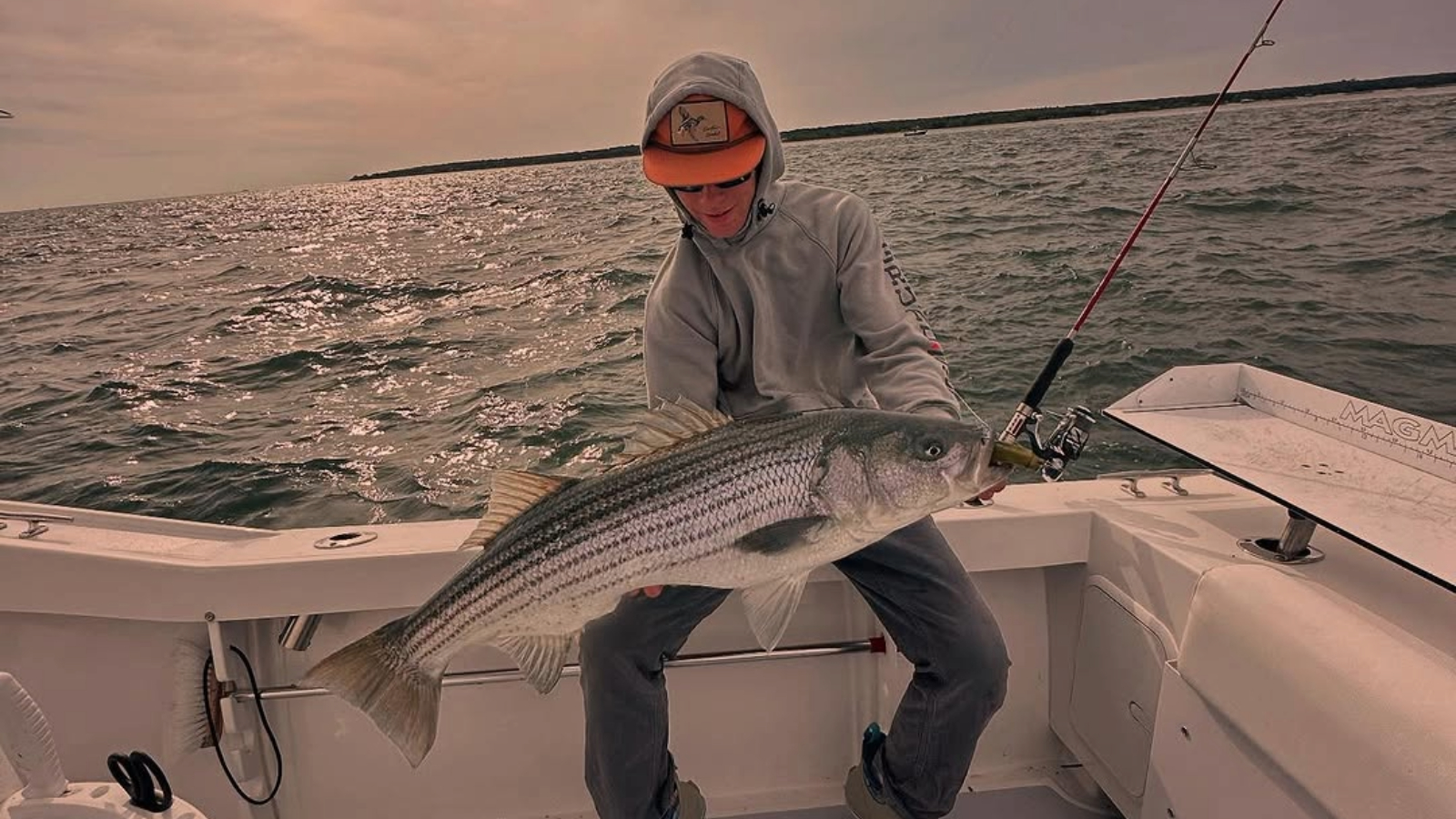
After weeks of quiet, the island finally stirs with the excitement of the return of spring, and more specifically, the striped bass. The striped bass is the prized inshore gamefish on the island, prized for its sporty fight and delicious taste. The bass spawn south in the Chesapeake Bay before embarking on a long journey up the Eastern Seaboard. They push north into the Delaware Bay, past the Jersey Shore, curl around the Long Island Sound, thread through the waters off Block Island, before finally making their way to Cape Cod, Nantucket, and Martha’s Vineyard. Taking approximately 60 days, these fish start their journey in the middle of March, appearing in Martha’s Vineyard sometime at the end of April or the start of May, with timing varying from year to year. These fish travel in groups, with the small “schoolies” leading the way, with larger fish on their tails.
For a fisherman, such as Aidan Olsen, the idea of the fish soon arriving gets him through the winter, where all there is to do is “hunt deer and ducks.” Aidan is a high school senior who has lived on the island his whole life and excels out on the water. When the stripers arrive, Aidan wakes up early every day to land a few before school starts. Whether from the beach or from a boat, on most days, he can land at least three fish. As a local, he has found spots that work for him year in and year out, and being able to rely on that consistency brings the Vineyard back to life for him. For him and many other young fishermen, the spring striper run isn’t just about catching, it’s about being part of a tradition that signals the end of the long winter and the start of spring on the island.
Doug Asselin loves this tradition so much that he made it his job. Also born and raised on the island, Dougie grew up with a fishing pole in his hand, always trying to find ways to get out on the water. He recognizes that the winter is slow, with not much to be done, and knows that once those first few fish find the waters surrounding the Vineyard, winter is over, and the best time of the year is ahead, the spring and summer. Dougie works at Dick’s Bait and Tackle, a fishing store located in Oak Bluffs, where he can make fishing his life. When he is not restocking new tackle or helping out a customer, Dougie is normally at one of his favorite beaches or piers, looking for hungry, explosive bass. He says that the early stripers “are usually chasing big baits like squid or mackerel, making them more aggressive and more enjoyable to catch.” For Dougie, spring is the best time of the year on the Vineyard, and thoughts of that special time are what get him through the long winters.
For fishermen like Dougie and Aidan, the spring striped bass run is more than a season; rather, it’s a marker of life and energy returning to the island after a long, cold winter. The striper’s long journey from the Chesapeake Bay mirrors the dedication and patience of those who wait for them, and every cast, every catch, every time out on the water, is a small reward for months of waiting. These fish do not simply arrive; they are summoned, drawn north by the same ancient pull that brings the local fisherman back to the shoreline each morning, rod in hand, answering the same call they always have. On Martha’s Vineyard, the arrival of these prized fish signals not just the start of spring and summer, but also the continuation of a tradition that connects the residents, the island, and the sea that has lasted for decades, and will continue for more to come.


